


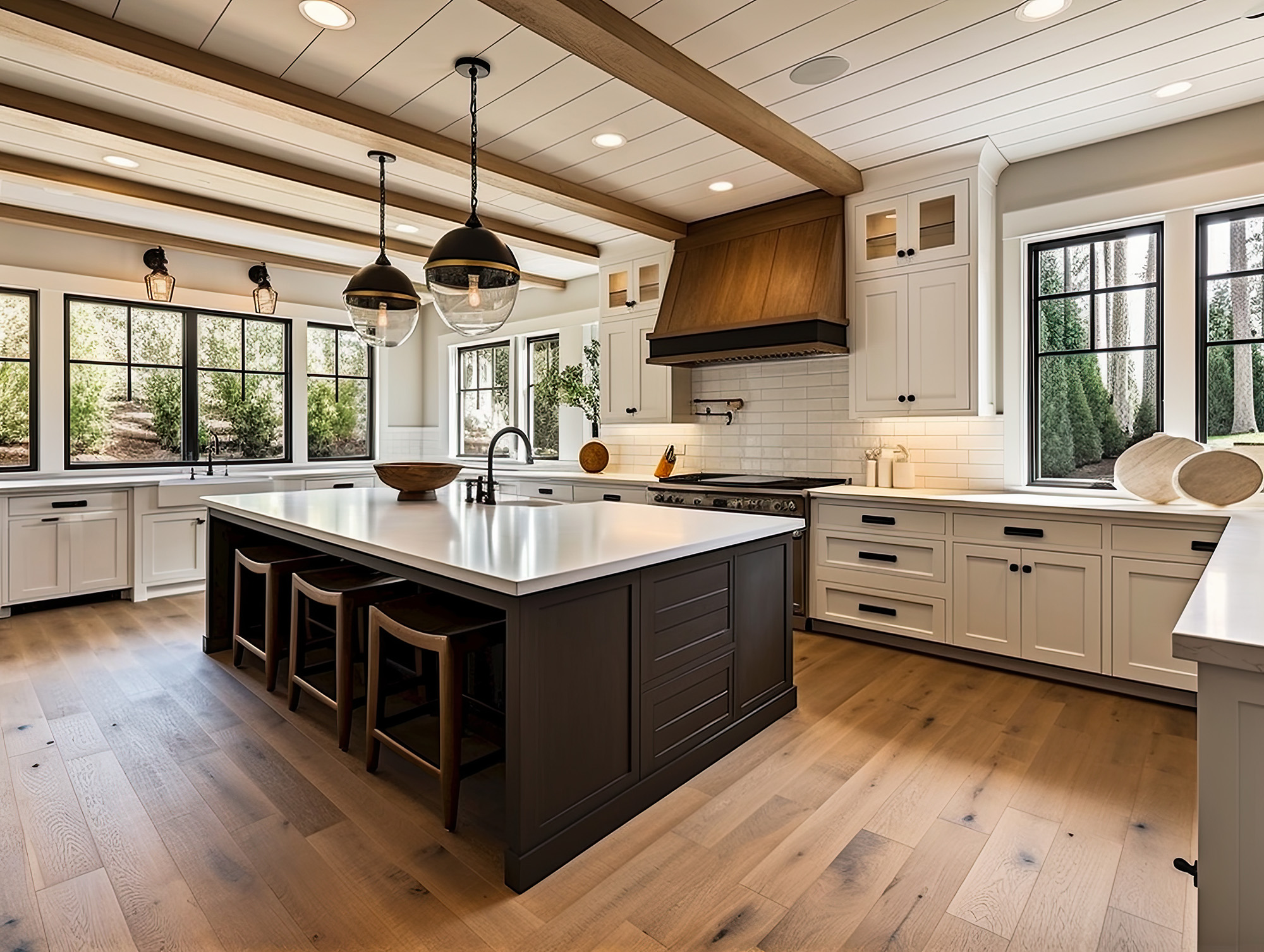
Hardwood flooring can bring warmth and continuity to a kitchen, especially when you want the room to connect naturally with adjoining living and dining areas. But kitchens put flooring through a different kind of stress than bedrooms or formal spaces. Water splashes, cooking spills, dropped utensils, frequent cleaning, and changing humidity all affect how the floor performs.
Choosing the best hardwood flooring for kitchens means looking beyond color and grain. You need to consider the difference between solid hardwood flooring and engineered hardwood flooring, how the product is finished, and whether your household can keep moisture under control.
Solid Hardwood Flooring: Classic Character With Moisture Considerations
Solid hardwood flooring is made from a single piece of wood, which gives it a substantial construction and the potential for repeated sanding and refinishing. If you want a traditional wood floor that can be refreshed as it ages, solid hardwood may be appealing.
The main concern in a kitchen is moisture. Wood naturally expands and contracts as humidity changes, and standing water can lead to swelling, cupping, staining, or gaps. Solid hardwood is not automatically unsuitable for kitchens, but it requires careful installation, stable indoor conditions, and prompt cleanup of spills.
Your subfloor, the home's humidity, and the manufacturer's installation requirements all influence whether solid hardwood is appropriate. In homes with recurring moisture problems, correcting those conditions should come before choosing the flooring material.
Engineered Hardwood Flooring: A More Stable Construction
Engineered hardwood flooring has a real-wood surface layer attached to a core made from multiple layers of wood or wood-based materials. This construction generally helps the boards respond more consistently to changes in humidity than solid wood, although performance varies by product.
For kitchens, that added dimensional stability can be useful, particularly where seasonal humidity changes are noticeable. Still, engineered hardwood is not waterproof. Liquid can enter through seams, exposed edges, damaged finishes, or areas around appliances and sinks.
The thickness of the real-wood wear layer also matters. Some engineered floors can be refinished, while others allow limited sanding or none at all. If long-term refinishing is important to you, ask about the product's construction before purchasing. Choose a product specifically approved by its manufacturer for the intended installation and room conditions.
What to Look for in Kitchen Hardwood
The finish and surface texture influence how your kitchen floor looks after everyday use. A durable factory-applied or professionally applied finish can help resist ordinary spills and abrasion, but no finish eliminates the need for care. Wipe up water and food spills promptly, especially around the sink, dishwasher, and refrigerator.
Wood species, grain pattern, color, and sheen also affect how visible everyday marks become. A naturally varied grain or a mid-range color may disguise some dust and minor wear better than a very dark, uniform surface. Matte and satin finishes can reduce glare compared with high-gloss options.
Board width is another consideration. Wider planks can create a more open visual effect, but the suitability of a particular width depends on the product's construction and installation requirements. Ask about acclimation, expansion allowances, and the recommended indoor humidity range.
Kitchen Flooring Choices and Installation Mistakes to Avoid
Do not select hardwood based on appearance alone or assume that every product marketed as water-resistant is suitable for prolonged moisture exposure. Water resistance and waterproof performance are not interchangeable, and neither makes poor installation acceptable.
Avoid installing over a damp or unsuitable subfloor. Follow the manufacturer's requirements for moisture testing, acclimation, fastening or adhesive, and expansion space. Skipping these steps can contribute to movement, gaps, or other problems after installation.
Think about how your household uses the kitchen. A busy family kitchen may need more frequent cleaning and spill checks than a rarely used entertaining space. If leaks, flooding, or persistent humidity are likely, compare hardwood with flooring options designed for greater water exposure before committing. A professional assessment can help determine whether your existing conditions are suitable for the product you prefer.
Find Kitchen Hardwood That Fits Your Home
The best hardwood flooring for kitchens balances appearance, construction, and realistic maintenance expectations. Solid hardwood can offer long-term refinishing potential, while engineered hardwood may provide greater dimensional stability in changing indoor conditions. Neither option should be treated as waterproof, so your household habits and the kitchen's moisture risks matter.
At Fredericks Floorcovering, you can compare hardwood styles and ask questions about construction, finishes, and installation requirements. Consider your kitchen layout, adjoining rooms, and daily routines when narrowing your options.
Visit our showroom at Parma, OH to explore samples and discuss what may work best for your home. If you are ready to plan your project, contact us today to arrange an in-home measurement and estimate and get guidance on your flooring choices.


