


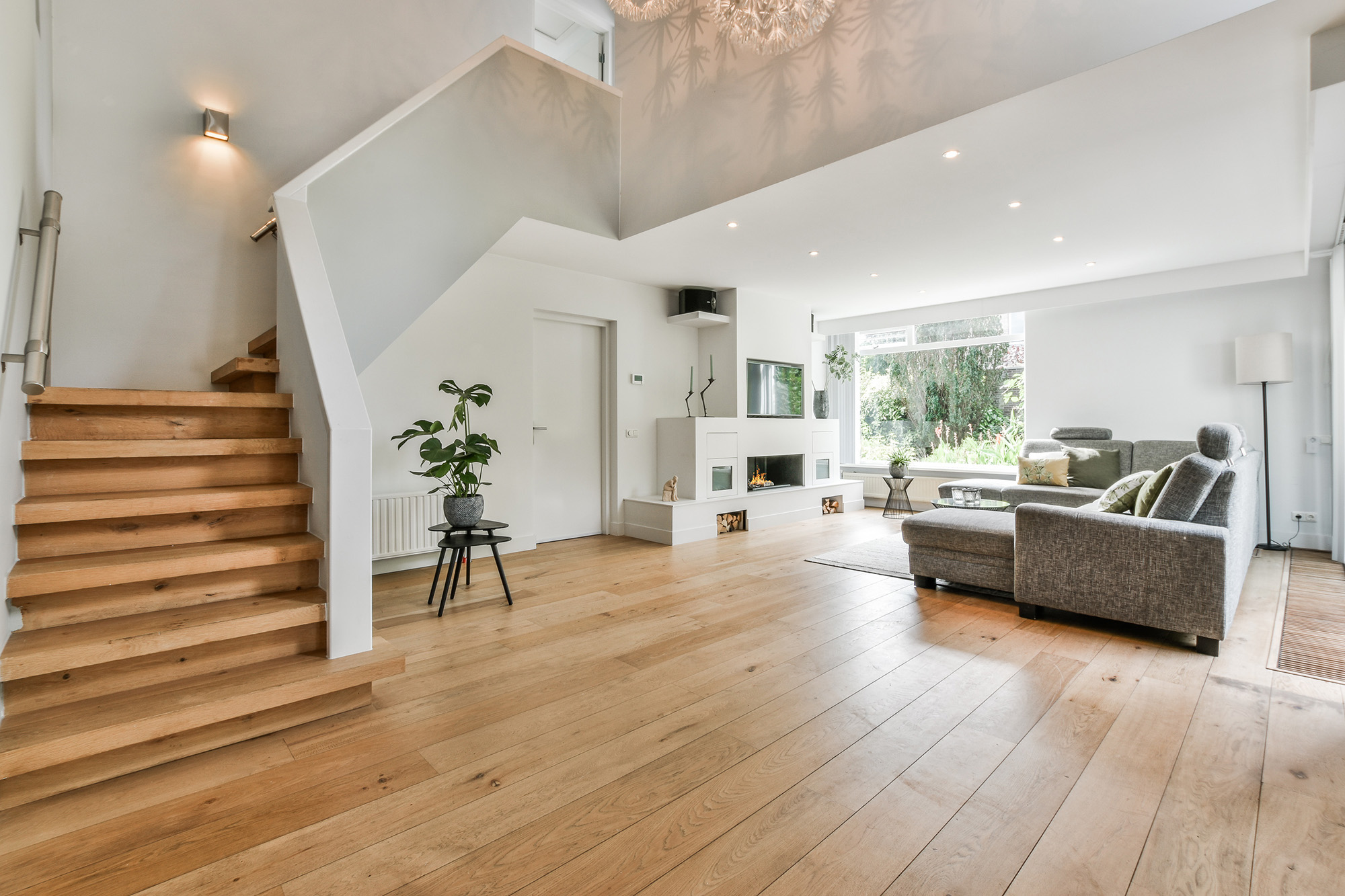
Replacing hardwood in only part of a home can create a design challenge. You may want the new floor to connect naturally with the older flooring without making the difference between the two areas too obvious.
Blending new and existing hardwood is possible in many situations, but the result depends on species, board dimensions, finish, color, installation pattern, and the condition of the existing floor. A thoughtful plan before hardwood installation can help you decide whether to match, coordinate, or deliberately contrast the two floors.
Start by Identifying the Existing Hardwood
Before ordering new flooring, determine what you already have. Look at the species, board width, thickness, grain pattern, finish, and installation pattern. An exact match can be difficult if the original flooring is older or no longer manufactured. Even when you find a product with a similar name, differences in production, color, aging, and finish can make the new boards look different. Bring a sample of the existing floor to a flooring professional if possible. Seeing the actual material is much more useful than describing its color.
Matching Does Not Always Mean Identical
If an exact match is unavailable, you can explore complementary options. A close color with a slightly different plank width may create a transition that feels intentional. In some layouts, a visual break at a doorway or room boundary can make the change easier to integrate.
Another option may be refinishing the existing floor and selecting a new floor that works with the refreshed color. Whether this is practical depends on the condition and construction of the existing hardwood. The goal is not necessarily to make two different floors appear identical. It is to create a transition that looks considered rather than accidental.
Color and Aging Can Make Matching Tricky
Older hardwood may have changed color over time because of sunlight, finishes, cleaning, and normal aging. A new board can look noticeably brighter or different even if it came from the same species. This is why small samples can be misleading. Compare larger samples against the existing floor and evaluate them in the room's actual lighting.
Current hardwood flooring trends 2026 include natural-looking colors and visible wood character, so a deliberate contrast can sometimes work better than forcing a near-match that still looks noticeably different.
Installation Planning Makes a Difference
The transition between old and new flooring should be considered before work begins. Board direction, room layout, thresholds, doorways, and the relationship between adjacent spaces can all influence how the finished project looks. Fredericks Floorcovering provides professional hardwood installation and can evaluate the existing flooring and subfloor as part of the project.
The company also offers free in-home measuring and floor leveling services. A professional assessment can help determine whether the new flooring should be installed as a close visual match, a coordinated companion, or part of a larger flooring update.
Create a Transition That Looks Intentional
New and older hardwood do not have to be identical to work well together. The most successful approach depends on the existing floor, the available replacement product, the room layout, and your design goals. In some homes, a close match is practical. In others, a complementary finish or defined transition makes more sense.
Fredericks Floorcovering can help you evaluate the existing hardwood and compare potential new flooring options. You can visit our showroom to see samples and discuss how different colors and plank styles may work with your current floor. Parma, OH gives you a place to explore possibilities before committing. If you're considering an addition or replacement, contact us today to discuss your project and plan the hardwood installation.