


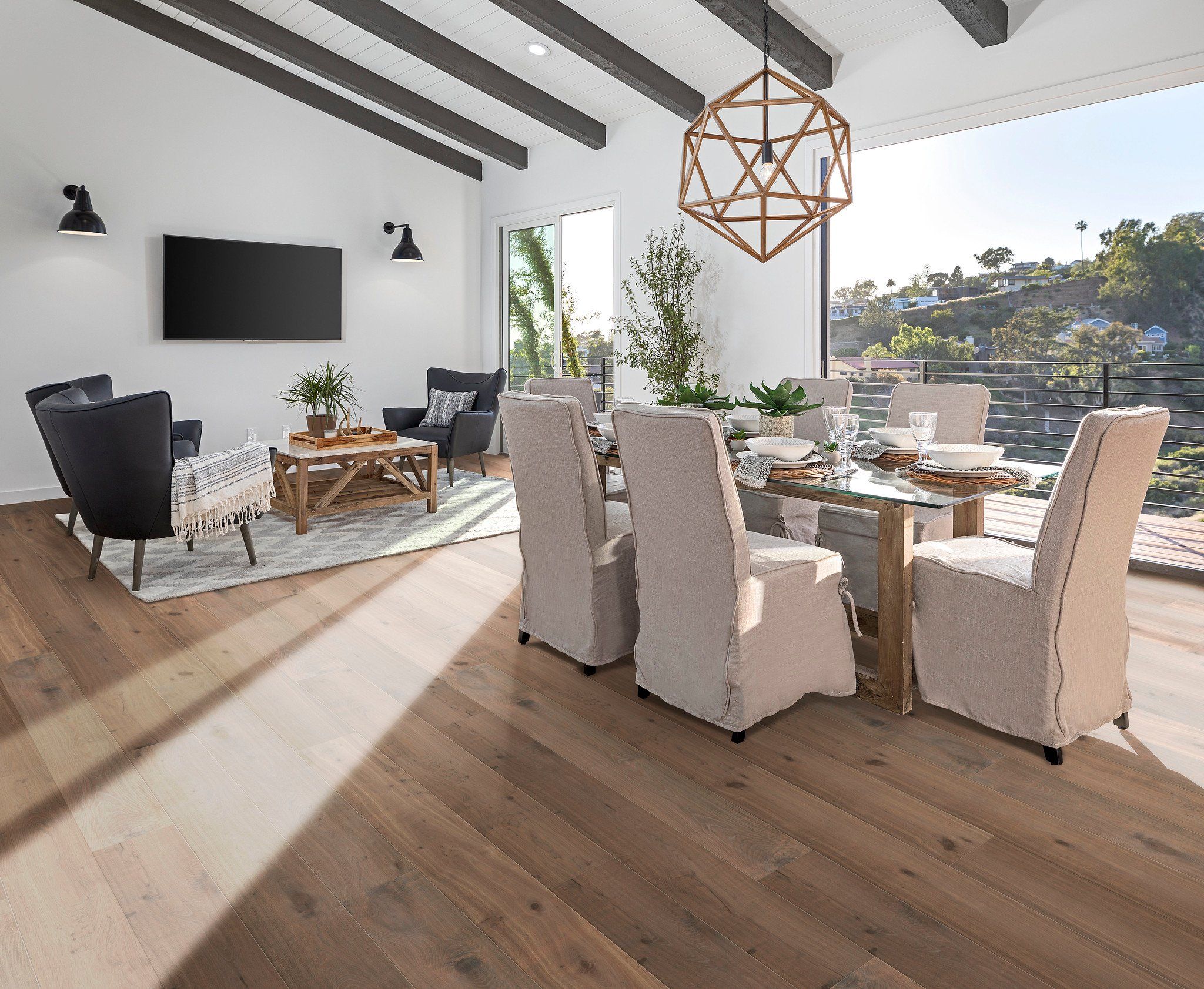
Hardwood flooring is valued for its durability, but no wood floor is completely immune to scratches. The species you choose can influence how readily the surface dents or scratches, but it is only one part of the equation.
Your finish, household habits, furniture, pets, maintenance routine, and even the type of debris tracked indoors can affect how a floor looks over time. Understanding these factors can help you choose hardwood flooring based on your actual lifestyle rather than assuming one species will solve every wear concern.
Wood Hardness Matters, but It Is Not the Whole Story
Hardwood species are often compared using the Janka hardness scale, which measures the force required to embed a steel ball into the wood. A higher rating generally indicates greater resistance to denting under the test conditions. That information can be useful when comparing species, but it does not predict every type of everyday damage.
A hard wood can still develop surface scratches from grit, pet activity, furniture movement, or other sources. The finish matters, too. The protective finish is the first surface exposed to many everyday sources of wear, so choosing a flooring product with an appropriate finish is an important part of the overall decision.
Your Household Can Matter as Much as Species
Think about what actually happens on your floors. Do shoes regularly enter through the main living area? Are children playing on the floor? Do pets move quickly across the room? Does furniture get rearranged often These habits can influence the appearance of hardwood regardless of species.
Entry mats can reduce tracked-in grit, while felt pads beneath furniture can help limit scratching during movement. Regular cleaning also matters. Fine dirt and sand can act like abrasives when repeatedly walked across the floor. Following the flooring manufacturer's care instructions can help preserve the finish and appearance.
Choose the Finish and Appearance Carefully
If your priority is maintaining a floor that looks attractive despite everyday activity, consider more than the wood species. Grain variation, color, finish, and sheen can all affect how visible small marks appear. A floor with natural variation may visually disguise minor changes better than an extremely uniform surface.
A lower-sheen finish may also create a different visual effect from a glossy surface. Current hardwood flooring trends 2026 include natural-looking finishes and authentic wood character. These styles can provide visual interest while allowing some everyday variation to become part of the floor's appearance rather than something that immediately stands out.
Professional Hardwood Installation Starts With the Subfloor
Scratch resistance cannot compensate for installation problems. The subfloor needs to be appropriate for the selected product, and the flooring should be installed according to manufacturer requirements. Fredericks Floorcovering provides professional hardwood installation and also offers floor leveling when an uneven subfloor needs attention.
The company carries hardwood from Shaw, Anderson Tuftex, Sheoga, and Mannington. Discussing your household habits during the selection process can help the flooring team guide you toward products and finishes that fit the way your home is used.
Choose Hardwood Based on Realistic Expectations
Hardwood species can influence how easily a floor dents, but durability is broader than a hardness rating. The finish, grain, color, maintenance routine, furniture protection, and everyday activity all contribute to how your floor looks over time.
Fredericks Floorcovering can help you compare hardwood flooring products with your household's needs in mind. You can visit our showroom to see different wood species, colors, and finishes firsthand. Parma, OH gives you a place to explore options before beginning your project. If you're ready to find flooring that fits your lifestyle, contact us today to discuss your choices and plan professional hardwood installation.