


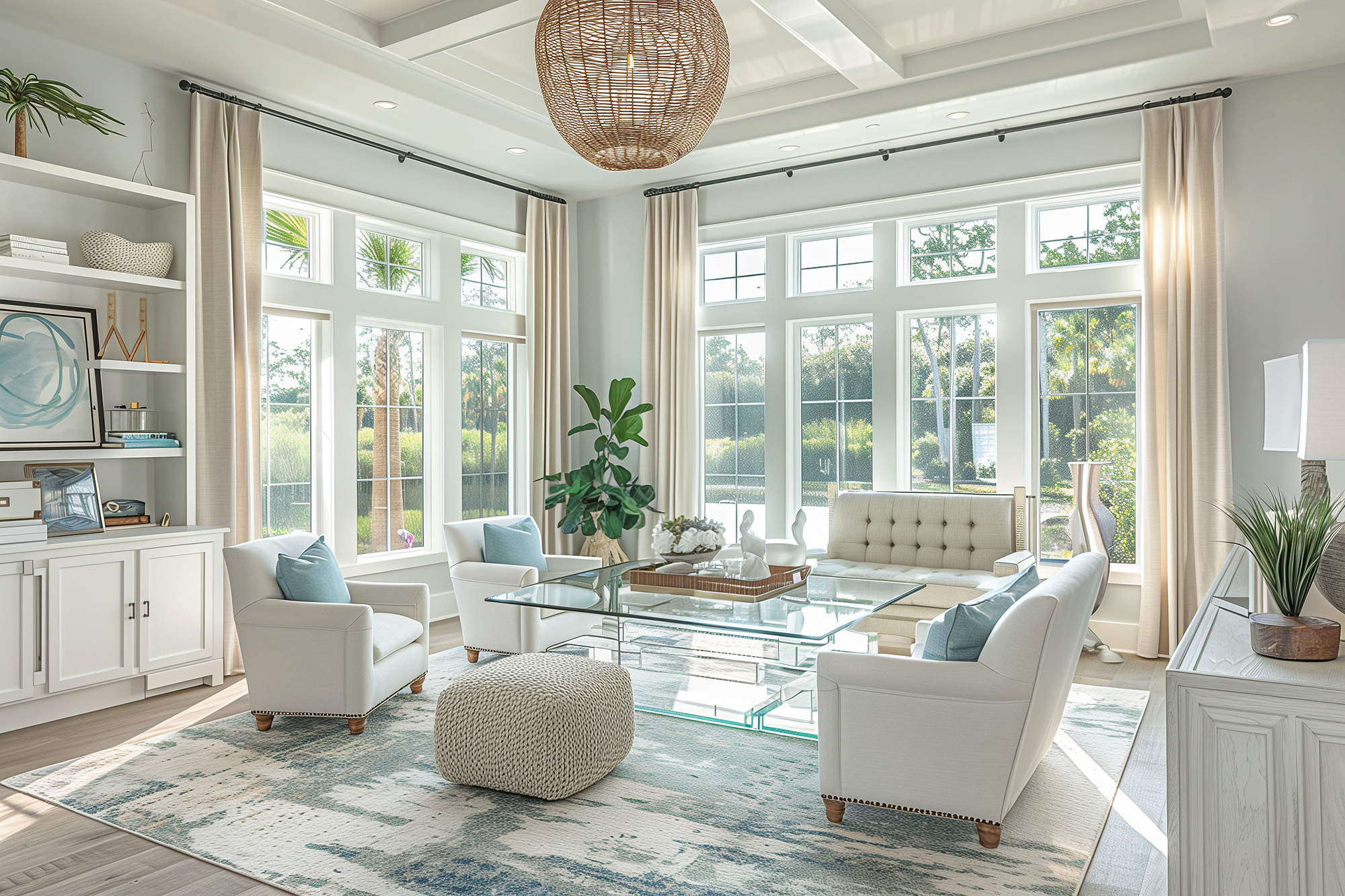
The direction of hardwood flooring can have a surprisingly strong effect on how rooms connect visually. When several spaces meet, homeowners often wonder whether the boards should all run in one direction or whether changing direction can make sense in certain areas.
There is no universal rule that requires every board in a home to point the same way. The right layout depends on the architecture, room dimensions, transitions, light, and installation requirements. Thinking about those factors before hardwood installation can help you create a floor that feels intentional throughout the house.
A Consistent Direction Can Create Continuity
Running hardwood in a consistent direction across connected spaces can make an open floor plan feel more cohesive. The uninterrupted visual lines can help rooms appear connected rather than separated. This can be particularly effective when several areas share the same flooring.
A consistent direction may also simplify the visual transition between a living room, dining area, hallway, and kitchen. However, room dimensions can affect the result. In a long, narrow room, the board direction may emphasize the room's length. In another space, a different orientation may produce a more balanced appearance.
Room Shape Should Influence the Layout
Instead of automatically choosing one direction for the entire house, look at each room's proportions. Consider the longest dimension, major architectural features, doorways, and how people naturally move through the space. Light is another consideration.
Natural light entering through windows can interact with the lines of the boards and influence the way the room appears. You should also account for existing flooring if you're extending hardwood into an adjacent room. Matching the direction may create a smoother connection, while a deliberate change can define the boundary between spaces.
Transitions Can Make Direction Changes Work
Changing direction does not have to look like a mistake. Thresholds, doorways, borders, and other transition details can make a shift in board direction feel intentional. The key is planning the transition before installation rather than deciding where the boards should change direction after work begins.
The installer also needs to account for the specific flooring product and manufacturer's requirements. Fredericks Floorcovering provides professional hardwood installation and offers free in-home measuring. The team can evaluate the actual rooms and discuss the installation process before the project begins.
Let Your Design Style Guide the Final Choice
Hardwood flooring trends 2026 continue to include wider planks and natural-looking designs, both of which can make board direction more visually prominent. That makes planning even more useful when multiple rooms share the same flooring. If your home has an open layout, consistent direction may help create a calm, connected appearance. If the rooms are more clearly separated, changing direction at an intentional transition may provide useful definition. There is no need to follow a trend simply because it is current. The architecture of your home should remain the strongest guide.
Plan the Floor Direction Before Installation
The direction of hardwood can influence the way rooms look and connect, so it is worth considering before the flooring arrives. Look at room proportions, natural light, doorways, existing floors, and transitions rather than applying one rule to the entire house. Fredericks Floorcovering can help you evaluate hardwood flooring layouts and discuss how different directions may work with your home's architecture.
You can visit our showroom to compare hardwood products and talk through your design ideas. Parma, OH gives you a convenient place to begin exploring your options. When you're ready to move forward, contact us today to arrange an in-home measure and plan your hardwood installation.